Getting fresh ink is exciting. But tattoo swelling can dampen that enthusiasm quickly. Your new artwork shouldn’t cause prolonged discomfort. This guide delivers proven methods to minimize swelling and accelerate tattoo healing. You’ll master aftercare techniques that work.
Understanding Tattoo Swelling
Swelling represents your body’s natural defense response. Fresh tattoos trigger immediate inflammatory reactions in skin. Knowledge helps manage expectations and promotes better healing. Understanding normal swelling prevents unnecessary panic about recovery.
What Causes Tattoo Swelling
Tattoo needles create thousands of microscopic wounds. Your body dispatches white blood cells immediately. Plasma and lymphatic fluid accumulate around injury sites. The immune system treats tattoo ink as invader. Blood vessels dilate to deliver healing compounds fast. Histamines release, causing visible puffiness around inked areas.
Larger tattoos create more extensive skin trauma. Color tattoos may trigger different reactions than black. The tattooed area location affects inflammatory response intensity. Joints and extremities typically swell more than flat surfaces. This tattoo reaction is completely normal initially.
Factors Affecting Swelling Duration
Tattoo size directly impacts your healing timeline. Placement matters significantly: joints swell longer than backs. Ankles and feet experience prolonged tattoo swelling. Your age influences healing speed dramatically. Hydration levels affect fluid retention patterns around tattoos.
Pre-existing health conditions complicate the healing tattoo process. Medications like blood thinners increase swelling severity. Heavy-handed artist technique creates more tissue damage. Multiple sessions compound inflammation effects over time.
Normal healing timeline expectations:
- Small tattoos: 3-5 days
- Medium pieces: 5-7 days
- Large tattoos: 7-14 days
- Sleeve work: Up to 3 weeks
Summer heat worsens swelling management challenges significantly. Winter brings different complications with restrictive clothing needs.
When Swelling Is Normal Versus Concerning
Normal swelling peaks around day two or three. Gradual reduction signals proper wound healing progress. Mild warmth around the tattoo site feels expected. Slight redness extending beyond ink lines is acceptable. Some clear fluid leaking remains completely normal initially.
Red flags requiring immediate medical attention:
| Normal Symptoms | Concerning Signs |
| Mild warmth | Hot, painful skin |
| Clear/light fluid | Yellow/green discharge |
| Gradual improvement | Worsening after day 3 |
| Slight redness | Red streaks spreading |
| Moderate discomfort | Fever above 100.4°F |
Allergic reaction patterns differ from infection symptoms. Red ink causes allergic responses most frequently. Hives or widespread rash signals systemic problems. Difficulty breathing requires emergency room visits immediately. Trust your instincts about abnormal tattoo aftercare concerns.
Immediate Steps to Reduce Swelling After a Tattoo
First 24 hours prove crucial for inflammation control. Quick action prevents excessive puffiness from developing unnecessarily. These techniques work best when started immediately post-session. Consistency matters more than any single method alone.
Applying a Cold Compress
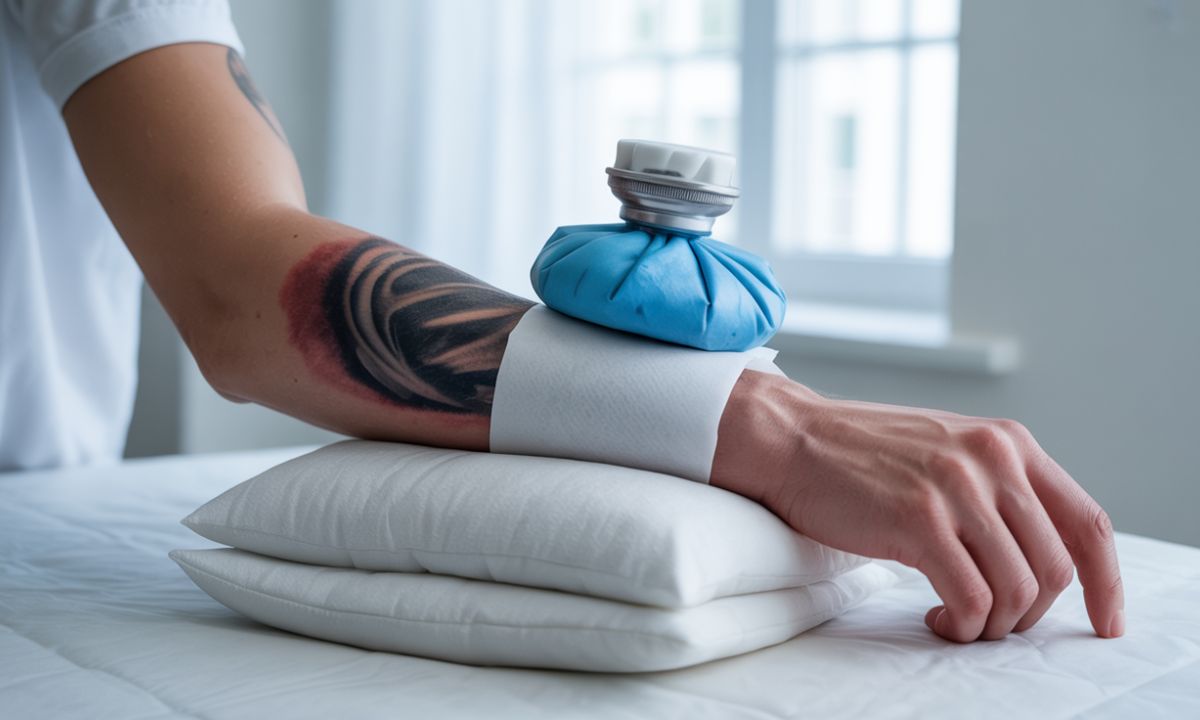
Cold reduces blood flow to inflamed regions. Vasoconstriction minimizes fluid accumulation around fresh ink. Never apply ice directly to new tattoos. Always wrap ice packs in clean cloth barriers.
Apply for 15-20 minutes per cooling therapy session. Wait one hour between applications minimum to prevent tissue damage. Over-icing can harm healing skin cells permanently. Frozen vegetables make excellent emergency cold wrap options.
First 48 hours benefit most from cold application. After three days, switch to room temperature care. Cold compress techniques also numb pain effectively while reducing puffiness.
Elevating the Tattooed Area
Gravity naturally pools fluid in lower body areas. Elevation encourages drainage back toward your heart. This proves especially crucial for leg tattoo locations. Prop tattooed limbs above heart level whenever sitting.
Use pillows to create comfortable elevation angles easily. Sleep with leg tattoos propped on cushions overnight. Maintain elevation for 20-30 minute intervals throughout days. Combine with entertainment time for easier compliance.
Consistent elevation throughout first week helps most. Foot tattoos demand serious elevation commitment for healing. Avoid prolonged standing with new leg ink whenever possible.
Gently Washing the Tattoo
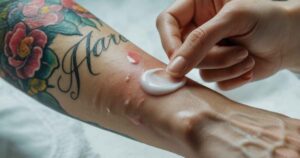
Clean tattoos heal faster with minimal skin irritation. Bacteria triggers increased inflammatory responses around wounds. Remove artist’s bandage after their recommended timeframe only.
Wash hands thoroughly before touching new ink ever. Use lukewarm water, never hot or cold temperatures. Fragrance-free antibacterial soap works best for aftercare. Regular mild soap suffices if antibacterial remains unavailable.
Proper washing technique steps:
- Cup water in palm gently
- Pour over tattooed area softly
- Use fingertips only, no cloths
- Remove all plasma and blood
- Pat dry with paper towels
- Never rub or scrub initially
Wash 2-3 times daily during first week consistently. Morning, evening, and after sweating proves ideal. Over-washing strips natural protective skin oils unnecessarily.
Avoiding Tight Clothing
Constriction restricts circulation and traps unwanted heat. Trapped heat accelerates swelling around tattoo designs. Friction irritates healing skin significantly during aftercare process. Choose loose-fitting garments over the inked region always.
Cotton breathes better than synthetic fabric options. Natural fibers reduce moisture accumulation around wounds. Moisture breeds bacteria and extends swelling duration unnecessarily. Avoid waistbands crossing new tattoo site locations entirely.
Thigh tattoos need flowy skirts or loose shorts. Jeans typically prove too restrictive for initial healing. Sweatpants or athletic wear provides better healing options. Consider clothing before choosing your tattoo location carefully.
Tattoo Aftercare Tips for Managing Swelling
Aftercare determines your tattoo’s final appearance significantly. Consistent routines prevent complications from developing into problems. Small daily efforts yield dramatic healing improvements quickly. Your artist’s specific aftercare instructions always take priority.
Following Aftercare Instructions
Every artist has slightly different care protocols tested. Their experience with their technique matters most here. Some recommend washing immediately after bandage removal. Others prefer leaving initial bandage coverage overnight instead.
Listen to your artist’s specific timeline recommendations carefully. They know how their needle depth heals best. Write down instructions before leaving the shop clearly. Post-tattoo adrenaline makes memory completely unreliable for details.
Don’t mix advice from multiple artist sources. Conflicting methods confuse your tattoo healing process unnecessarily. Internet advice can’t assess your specific situation accurately. Trust your artist unless obvious red flags appear.
Proper Moisturizing and Protection
Moisturized skin heals faster than dry, cracked tissue. Cracking invites infection and increased tattoo swelling problems. Wait until tattoo feels dry before first application. Timing varies: typically 4-24 hours after getting inked.
Over-moisturizing suffocates healing skin cells unfortunately. Less genuinely proves more with tattoo ointments always. Thin layers barely visible work perfectly for aftercare. Thick applications slow necessary oxygen exchange during recovery.
Popular aftercare product options:
- Aquaphor (petroleum-based, traditional choice)
- Hustle Butter (vegan alternative formula)
- After Inked (specialty tattoo product)
- Mad Rabbit (newer vegan option)
- CeraVe lotion (after week one)
Moisturize 2-3 times daily for first two weeks. After showers when skin remains slightly damp works. Midday touch-up prevents excessive dryness between applications. Before bed supports optimal overnight wound healing processes.
Sunscreen becomes crucial once fully healed completely. UV rays destroy tattoo pigments permanently over time. Sun exposure dramatically increases swelling during active healing. SPF 50+ protects your permanent artwork investment long-term.
Maintaining Good Circulation
Blood flow delivers nutrients essential for tattoo recovery. Stagnant fluid accumulates without proper circulation maintenance. Gentle movement prevents excessive swelling buildup around ink. Don’t confuse movement with strenuous exercise routines though.
Light walking encourages healthy blood flow naturally. Avoid cardio workouts for first 48 hours minimum. Heavy sweating introduces bacteria to open skin wounds. Gym equipment harbors concerning pathogen levels from users.
Swimming pools remain absolutely off-limits during initial healing. Chlorine irritates fresh tattoos significantly during aftercare process. Lakes and oceans introduce serious infection risks unnecessarily. Wait minimum two weeks before submerging tattoos anywhere.
Medications and Remedies to Control Swelling
Over-the-counter medications safely reduce inflammation when needed. Not every tattoo requires pharmaceutical intervention for healing. Mild swelling often resolves without medication assistance naturally. Severe discomfort justifies anti-inflammatory medication use appropriately.
Using Anti-Inflammatory Medication
NSAIDs reduce prostaglandins causing inflammation throughout body. These medications work systemically for several hours each. Multiple options exist at most pharmacies readily available. Choose based on your personal medical history carefully.
Anti-inflammatory medication works better preventatively than reactively always. Take at first sign of excessive tattoo swelling. Waiting until severe pain develops reduces effectiveness dramatically. Follow package dosing instructions exactly as written.
Never exceed maximum daily recommended amounts specified. Take with food to protect stomach lining properly. Empty stomach increases side effect risks significantly. Duration: typically needed for 2-4 days maximum only.
Don’t take aspirin for tattoo swelling ever. It thins blood excessively during critical healing periods.
Safe Use of Ibuprofen for Tattoo Swelling
Ibuprofen (Advil, Motrin) leads tattoo aftercare recommendations widely. Acetaminophen (Tylenol) treats pain without reducing inflammation though. Choose ibuprofen over acetaminophen for swelling specifically always.
Standard adult dose: 200-400mg every 4-6 hours. Maximum daily dose: 1200mg without doctor supervision ever. Start with lowest effective dose possible initially. You can always increase dosage if needed later.
Take with full glass of water always. Food protects stomach from potential irritation issues. Morning dose with breakfast establishes consistent routine. Ibuprofen takes 30-45 minutes to begin working effectively.
Stop taking once swelling visibly decreases satisfactorily. Most people tolerate short-term ibuprofen excellently without issues. Pre-existing kidney disease requires doctor approval beforehand. Heart conditions may contraindicate NSAID use entirely.
Identifying and Preventing Complications
Most tattoos heal without serious complications thankfully. Awareness prevents minor issues becoming major problems quickly. Early intervention stops infections from spreading to bloodstream. Knowledge empowers you to act quickly when needed.
Recognizing Signs of Infection
Infections typically emerge 3-7 days after getting tattooed. Increasing redness spreading beyond tattoo borders signals trouble. Warmth that intensifies instead of decreasing requires attention. Swelling that worsens after day three needs evaluation.
Throbbing pain distinct from normal soreness feels different. Pus discharge (thick, yellow, green, or smelly) indicates infection. Red streaks radiating from tattoo toward torso constitute emergencies. Swollen lymph nodes in nearby regions signal concern.
Normal healing includes clear or slightly cloudy fluid. Plasma and lymph fluid look similar to water. Yellowish tinge might just represent normal plasma discharge. Thick, opaque discharge signals bacterial infection requiring treatment.
Trust your nose along with visual assessment. Infected tattoos often smell distinctly foul and wrong. Color changes help distinguish infection severity levels accurately.
When to Seek Medical Attention for Fever or Allergic Reaction
Fever after tattoos indicates systemic body involvement. Temperature above 100.4°F warrants doctor visit immediately. Rising temperatures demand immediate medical attention always.
Fever accompaniments requiring urgent care include:
- Confusion or disorientation states
- Extreme fatigue or weakness feelings
- Nausea and vomiting episodes
- Rapid heartbeat while resting
- Difficulty breathing or shortness
- Severe uncontrollable chills
These symptoms suggest potential sepsis development. Blood infections spread rapidly without proper treatment intervention. Don’t drive yourself with severe symptoms present. Call ambulance for serious medical emergencies immediately.
Allergic reaction patterns present differently than bacterial infections. Hives appearing beyond tattoo area indicate allergy. Widespread itching across body signals ink sensitivity. Swelling in face, lips, or tongue requires action. Difficulty swallowing or breathing constitutes life-threatening emergency.
Call 911 immediately for breathing difficulties always. Anaphylaxis can develop hours after getting tattooed. Red ink causes allergies most frequently among pigments. Yellow and green inks also trigger reactions occasionally.
Preventing Infection During Healing
Prevention proves infinitely easier than treating infections afterward. Small consistent efforts eliminate most infection risks completely.
Essential infection prevention steps include:
- Wash hands before touching tattoo every time
- Use antibacterial soap for proper hand washing
- Keep tattoo covered in dirty environments only
- Change bedding frequently during first week
- Avoid public pools, hot tubs, lakes completely
- Keep pets away from fresh tattoos entirely
- Skip gyms during initial healing period
- Don’t let others touch your fresh ink
Choose clean, professional tattoo shops for work initially. Health departments inspect licensed shops regularly for safety. Check shop licenses and artist credentials before committing. Read recent reviews mentioning cleanliness and aftercare practices.
Artists should use new needles from sealed packages. Gloves get changed between every client always. Surfaces should be sanitized before your session begins. Questionable shops cause preventable infections and allergic reactions unnecessarily.
Frequently Asked Questions
What are effective home remedies to reduce swelling after getting a tattoo?
Cold compress, elevation, gentle washing, loose clothing, proper moisturizing works.
How long typically does swelling last after getting a tattoo?
Most tattoos: three to seven days with proper aftercare.
What are the best practices to reduce inflammation of a new tattoo?
Ice application, elevation, ibuprofen, gentle cleaning, artist’s aftercare instructions.
Why is my tattoo still swollen after several days?
Infection, allergic reaction, poor aftercare, or normal large tattoo healing.
Can a tattoo swell years after getting it, and what are the causes?
Yes. Allergic reactions, sun exposure, skin conditions cause delayed swelling.
Are there specific considerations for reducing swelling after a tattoo on the leg or arm?
Legs need elevation constantly. Arms require less restrictive clothing choices.
Conclusion
Swelling after tattoos is completely normal body response. Most tattoos heal beautifully with basic proper care. Immediate cold compress application and elevation reduce initial swelling. Gentle cleaning prevents complications from developing into infections. Proper moisturizing supports optimal healing conditions throughout recovery.
Loose clothing reduces friction and trapped heat accumulation. Ibuprofen safely manages pain and inflammation when needed. Following your artist’s aftercare instructions remains paramount always. Trust your instincts about abnormal symptoms requiring attention.
Medical attention prevents minor issues becoming major problems. Infections remain rare with proper tattoo aftercare practices. Your tattoo represents permanent body modification investment here. Invest time in healing process appropriately for results. Two weeks of careful attention ensures lifetime satisfaction.
Beautiful healed tattoos reward your patience and dedication. Your new tattoo tells your unique story permanently. Give it the healing time it truly deserves. Share your healing experience and help others navigate this process successfully.