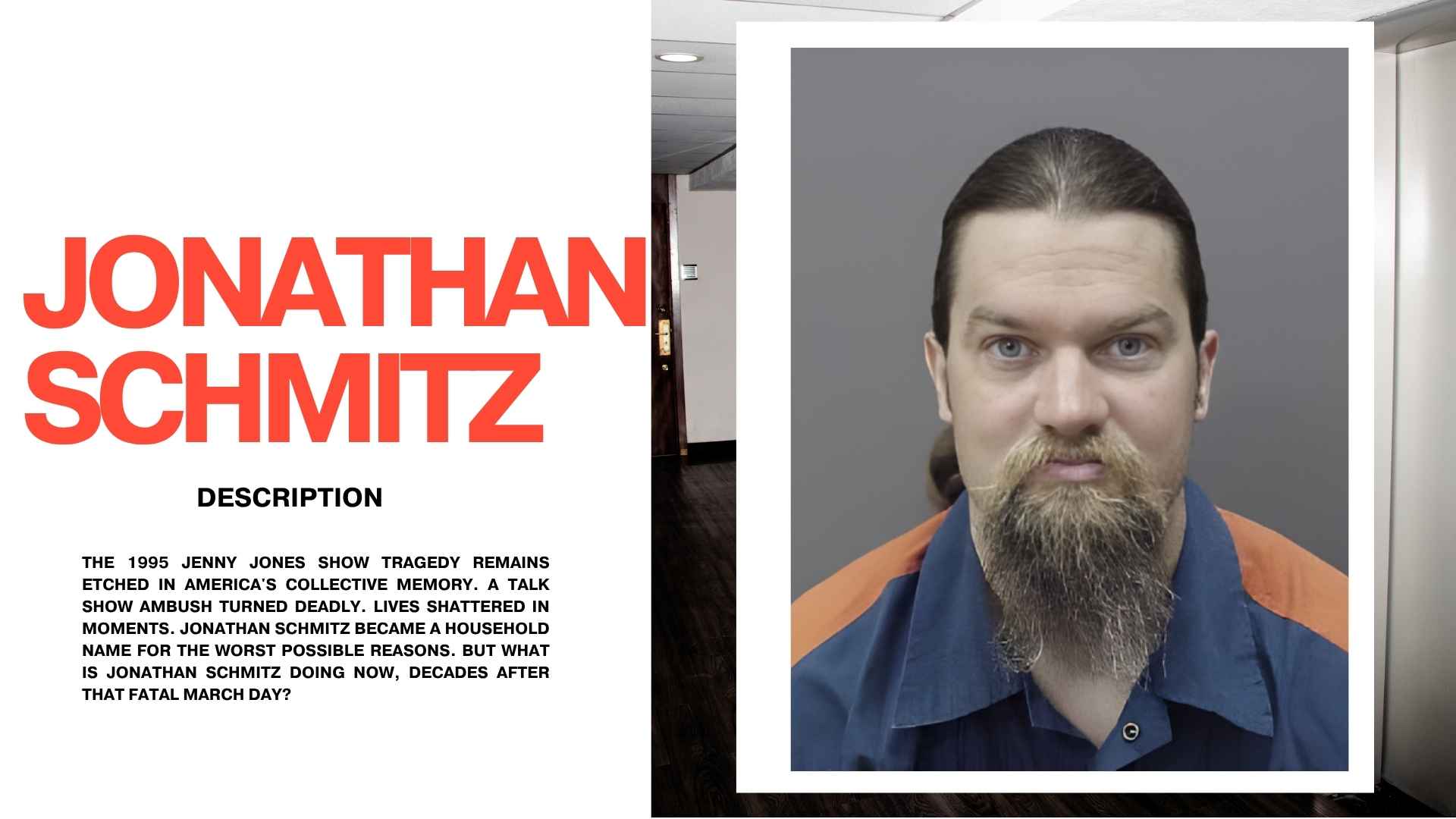
The 1995 Jenny Jones Show tragedy remains etched in America’s collective memory. A talk show ambush turned deadly. Lives shattered in moments. Jonathan Schmitz became a household name for the worst possible reasons. But what is Jonathan Schmitz doing now, decades after that fatal March day?
The answer reveals a life deliberately hidden from view. A man choosing obscurity over explanation. This story explores where he is, what he’s doing, and why his case still matters in 2025.
The Jenny Jones Case Revisited
March 6, 1995 started as an ordinary taping. Scott Amedure appeared on the Jenny Jones Show to reveal a secret same-sex crush. The object of his affection? His acquaintance, Jonathan Schmitz. Cameras captured Schmitz’s visible shock and humiliation. The episode never aired. But the damage was done.
Three days later, everything exploded. Schmitz found a suggestive note at his Orion Township home. He drove to Amedure’s residence. Two shotgun blasts ended a life. Second-degree murder became the charge that would define decades.
The 1996 trial gripped the nation. Prosecutors argued premeditated revenge. Defense attorneys pointed to mental health issues specifically bipolar disorder and emotional instability. They claimed the ambush TV format triggered a psychological break. The jury convicted him anyway. His prison sentence: 25 to 50 years.
| Key Timeline Events |
| March 6, 1995 – Jenny Jones Show taping |
| March 9, 1995 – Fatal shooting of Scott Amedure |
| November 1996 – Second-degree murder conviction |
| 1999 – Amedure family wins $25M civil lawsuit |
| 2002 – Civil verdict overturned on appeal |
| August 2017 – Schmitz released on parole |
The Amedure family sued the show for wrongful death. They won $25 million initially. Appeals courts later overturned it in 2002. Questions about television ethics and media exploitation persisted. Should producers have predicted this outcome? Did they screen for psychiatric counseling needs? The broadcast ethics debate continues today.
Life After Prison: A Reclusive Return to Society
Twenty-two years behind bars changes a person. Jonathan Schmitz’s life in prison life meant missing entire technological revolutions. Smartphones. Social media. Streaming everything. He entered in 1996 when dial-up internet was cutting-edge. He emerged in 2017 into an unrecognizable world.
Parole release came in August 2017. Multiple earlier attempts had failed. But good behavior and psychiatric counseling participation eventually worked. His reintegration into society began quietly. Deliberately. Invisibly.
Former inmates face brutal challenges. Employment discrimination. Housing barriers. Social stigma that never fades. Add “convicted murderer” to your resume. See how many callbacks you get. Jonathan Schmitz understood this reality immediately.
He chose complete public disappearance. No interviews. No tell-all books. No redemption tour on podcasts. His reclusive living stands in stark contrast to typical post-prison media circuits. Some ex-convicts chase publicity. Schmitz runs from it.
Where Does Jonathan Schmitz Live Now?
Michigan remains his home state. Parole conditions typically restrict interstate movement initially. Specific cities stay undisclosed. Privacy protections for parolees exist for good reasons. Safety concerns. Harassment prevention. Fresh start possibilities.
Reports suggest modest circumstances. Neighborhoods where anonymity is actually possible. Communities that don’t recognize faces from decades-old news coverage. His exact address isn’t public information. It shouldn’t be. Everyone deserves the chance to rebuild under the shadow of past mistakes.
The low profile serves multiple purposes. It satisfies legal terms of supervision. It protects him from vigilante justice. It allows something resembling normal existence. Does he have neighbors who know his history? Possibly not. The digital age makes complete obscurity nearly impossible, but he’s trying.
Employment and Rehabilitation Efforts
What is Jonathan Schmitz doing now for work? That question has no confirmed answer. A second-degree murder conviction creates massive employment barriers. Most industries won’t touch violent offenders. Background checks instantly disqualify applicants. Age compounds the problem he’s now in his late 50s.
Speculation points toward manual labor. Construction. Warehouse work. Industries slightly more forgiving of criminal records. Cash-based arrangements happen frequently for the formerly incarcerated. Official employment records remain private under parole conditions.
Reintegration requires more than just finding a job. Mandatory programs include:
- Psychiatric counseling sessions
- Anger management training
- Substance abuse treatment (past struggles documented during trial)
- Regular supervision check-ins
- Employment verification requirements
Financial realities hit hard. Zero savings after 22 years. No retirement accounts. No career trajectory. No assets whatsoever. Starting from absolute nothing while carrying permanent stigma. This is the economic imprisonment that follows physical release.
Michigan’s “ban the box” laws help somewhat. Employers can’t immediately disqualify based on convictions. But once they discover the details? Most conversations end abruptly. The judicial process might have ended. The societal punishment continues indefinitely.
Public Perception and Ongoing Controversy
Public perception remains deeply divided. Some view Jonathan Schmitz as a victim of cruel media exploitation. The Jenny Jones Show set up a volatile situation for ratings. Others see an unforgivable murderer who deserves no sympathy. The victim, Scott Amedure, never got a second chance.
LGBTQ+ advocacy groups have complex perspectives. Was this a hate crime? The surprise revelation of same-sex attraction preceded violence. Did internalized homophobia contribute? The courtroom proceedings in 1996 occurred during very different cultural times. Marriage equality seemed impossible then. Visibility has increased dramatically since.
Mental health advocates point to documented psychological impact. Schmitz had diagnosed bipolar disorder. He struggled with emotional instability. The ambush TV format exploited vulnerable guests for entertainment. Could proper screening have prevented tragedy? We’ll never know definitively.
True crime content keeps the case study alive. Documentaries examine it regularly. Podcasts dissect every angle. YouTube videos attract millions of views. Each retelling introduces new generations to the controversy. The press coverage never truly ends. The media opinion cycle continues perpetually.
Societal view has evolved somewhat. 1990s talk shows thrived on humiliation. Surprise confrontations. Public embarrassment as entertainment. Would the Jenny Jones Show produce this episode today? Absolutely not. Broadcast ethics standards have tightened. The cultural impact of this murder case helped drive those changes.
Is Jonathan Schmitz Active Online or in Social Circles?
Complete digital absence defines his current existence. No Facebook profile. No Twitter account. No Instagram presence. No LinkedIn page. Zero verifiable social media anywhere. For someone seeking obscurity, this strategy makes perfect sense.
What is Jonathan Schmitz doing now socially? Probably maintaining extremely limited circles. Trust issues would run incredibly deep. The Jenny Jones betrayal taught harsh lessons about public exposure. Faith-based reentry programs sometimes offer support. Former inmate connections might exist. But widespread social engagement? Highly unlikely.
Public disappearance in 2025 is nearly impossible. Facial recognition technology exists everywhere. Google searches instantly reveal anyone’s past. Background checks flag him immediately. His assumed identity dreams can’t fully materialize. Living in the shadows becomes the only viable path forward.
Why maintain such media scrutiny avoidance? Any public statement would reignite firestorms. Financial offers for interviews surely exist. He rejects them all. Speaking out helps nobody, including himself. Quiet existence offers his only realistic future. The publicity machine would devour him whole.
Legal and Parole Status
Released August 22, 2017 after sentence reduction. His parole conditions extend for years beyond release. What is Jonathan Schmitz doing now to maintain compliance? Following every rule meticulously. One violation means immediate reincarceration.
Current legal terms include:
- Regular supervision meetings with parole officers
- Movement restrictions within Michigan
- Substance testing protocols
- Residence approval requirements
- Employment verification obligations
Review processes happen periodically. Authorities assess his adjustment and risk levels. Technical violations can trigger consequences even without new crimes. The precarious nature of post-prison freedom means constant vigilance. Zero margin for error exists.
When does state oversight end completely? Timelines vary based on behavior and legal implications of his original sentence. Will he ever truly escape this case’s shadow? No. The conviction follows him permanently regardless of official supervision ending. Background checks never expire. Google never forgets.
Has Jonathan Schmitz Shown Remorse?
Courtroom proceedings included emotional testimony. Schmitz broke down multiple times on the witness stand. He described the shooting’s immediate aftermath. He claimed mental breakdown and loss of control. But how genuine did legal observers find his regret?
Prison life behavior suggests something. Good conduct reports accumulated over two decades. Participation in psychiatric counseling and rehabilitation programs showed effort. Actions often reveal more than words. Parole boards don’t release inmates they consider dangerous. His eventual freedom indicates authorities saw genuine change.
Post-release silence complicates assessment. No public apologies exist since 2017. Does quietness indicate continued remorse or avoidance? Different people process guilt differently. Not all redemption requires public performance. Some argue the best thing he can do is stay invisible.
Scott Amedure’s humanity deserves emphasis. He was just 32 years old. Dreams cut short. Relationships ended. Family members still grieve decades later. No amount of time served returns what was stolen. The fatal shooting permanently altered multiple families. That reality never changes regardless of parole release.
Forensic psychologists distinguish between regret for consequences versus actions. Does Schmitz regret getting caught or regret the violence itself? Impossible to know without direct access. The stigma of his crime means public statements would be scrutinized mercilessly anyway. Silence might be his most honest response.
Cultural Impact of the Case Today
The Jenny Jones Show tragedy transformed television production. Media exploitation became a liability concern. Guest screening intensified dramatically. Psychiatric counseling assessments became standard practice. The ambush format essentially died. This murder case contributed significantly to those changes.
Cultural impact extends to LGBTQ+ representation. 1995 America treated coming-out stories as entertainment. The deadly consequences highlighted homophobia’s real-world dangers. Progress since then has been substantial. Marriage equality. Increased visibility. Better protections. But the historical significance of this case reminds us how recently things were dramatically different.
True crime obsession keeps the story alive. Each generation rediscovers it through different lenses. What is Jonathan Schmitz doing now becomes a perpetual question. The intersection of media, violence, and celebrity culture fascinates audiences endlessly.
Legal debate about producer responsibility reached appellate courts. First Amendment protections versus duty of care. How far does media liability extend? These questions shaped reality television’s legal frameworks. The influence continues today in production insurance and guest waivers.
Mental health awareness has improved since 1996. We better understand trauma responses. Public humiliation as a crisis trigger gets taken more seriously. Untreated mental health issues and violence connections are clearer now. This case serves as cautionary tale about support system importance.
FAQs
What happened to Jonathan Schmitz?
Convicted of second-degree murder, served 22 years, released 2017.
Why did they cancel Jenny Jones?
Show ended 2003 due to changing tastes, legal controversies.
Did Jenny Jones show have to pay?
Initially ordered $25 million, but verdict overturned on appeal.
Where is Scott Amedure now?
Tragically killed March 1995 by Jonathan Schmitz after show taping.
Conclusion: A Life of Quiet Obscurity
So what is Jonathan Schmitz doing now? Living anonymously somewhere in Michigan. Working blue-collar jobs presumably. Maintaining parole conditions compliance meticulously. Avoiding all media scrutiny and public attention. Existing in the shadows of a crime that permanently defined him.
Jonathan Schmitz’s life represents complex justice questions. He served 22 years for taking a life. Is that sufficient? Opinions vary wildly depending on perspective. The Amedure family lives with permanent loss. Schmitz lives with permanent infamy and consequences. Both realities coexist without resolution.
The legacy includes lessons that endure. Media exploitation can have deadly consequences. Mental health support must be accessible. Public humiliation isn’t entertainment it’s dangerous. LGBTQ+ individuals deserve dignity, not spectacle. These truths emerged from tragedy.
Will Jonathan Schmitz ever speak publicly? Extremely unlikely. His story serves as permanent cautionary tale regardless. True redemption might look exactly like what he’s doing: staying quiet and harming no one. Some controversies never end. They just fade into obscurity. Two lives were destroyed that March day in 1995. Countless others affected by ripples. What matters now is what we learned. The real question: Have we actually learned anything at all?