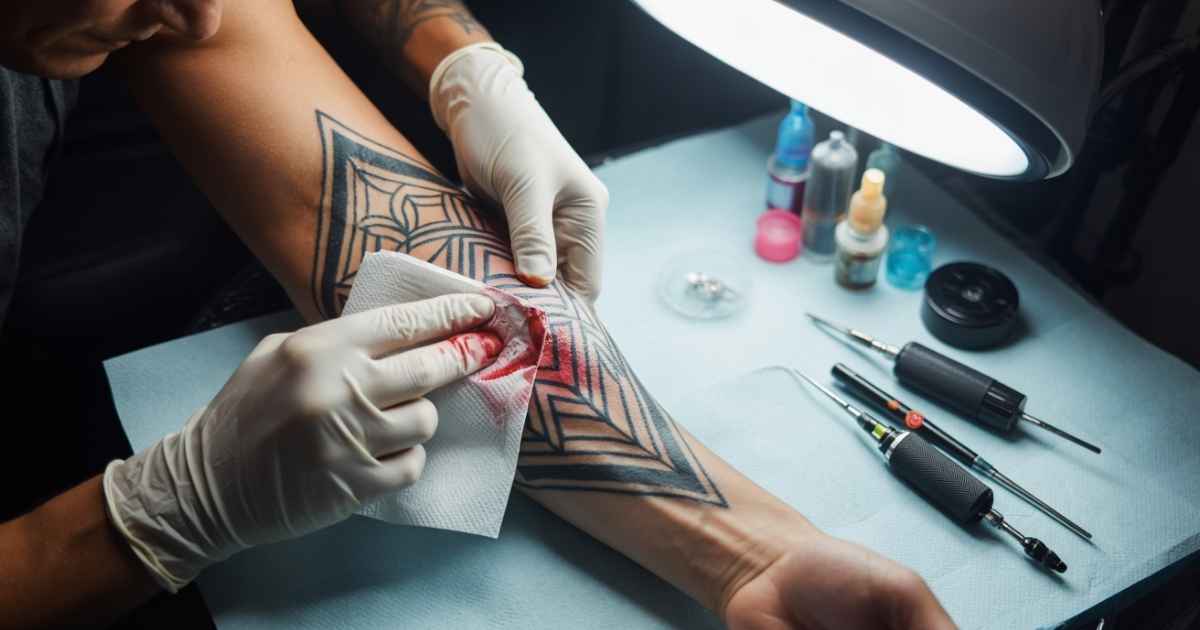
Getting inked is exciting until you notice blood. Tattoo bleeding catches many first-timers off guard. But here’s the thing: some bleeding during and after your tattoo session is completely normal. Your skin just experienced thousands of tiny punctures from a tattoo needle. Blood will appear.
This guide breaks down everything about tattoo bleeding. You’ll learn when to worry and when to relax. We’ll cover the healing process, aftercare instructions, and red flags requiring immediate attention.
Understanding Tattoo Bleeding
Tattoo bleeding is your body’s natural response to skin trauma. During each inking session, needles penetrate your dermis layer repeatedly. This punctures countless capillaries and blood vessels beneath your skin’s surface.
Think of it like thousands of tiny pinpricks happening simultaneously. Your circulatory system responds by sending blood to the wounded area. This explains why you see ink flow mixed with blood during the procedure.
The tattoo process creates controlled damage intentionally. Your professional inking expert knows exactly how deep to go. Too shallow and ink won’t stay. Too deep creates excessive scarring and bleeding.
Most bleeding stops within hours after your design appointment. What follows is typically tattoo oozing a mixture of plasma, excess ink, and clear fluid. This represents normal skin recovery.
What Causes a Tattoo to Bleed?
Several factors trigger bleeding during your tattoo appointment:
Primary Causes:
- Needle penetration through skin layers disrupts blood flow
- Capillary damage in high-density vascular areas
- Body’s inflammatory response to perceived injury
- Placement on thin-skinned or sensitive body parts
- Individual differences in skin thickness and composition
Your tattooist controls bleeding through technique and machine speed. Experienced artists adjust needle depth constantly. They recognize when they’re hitting more small veins than necessary.
Certain body locations bleed more predictably. Areas with abundant blood vessels like ribs, inner arms, and ankles show more ink leakage initially. Your inking expert expects this and plans accordingly.
| Body Area | Bleeding Level | Reason |
| Ribs | High | Thin skin, close to bone |
| Inner arm | Moderate-High | Vascular area with capillaries |
| Outer arm | Low-Moderate | Thicker skin, fewer vessels |
| Thigh | Low | Thick skin, fatty tissue |
| Ankle | High | Thin skin, bony area |
Normal vs. Excessive Bleeding
Understanding the difference prevents unnecessary panic. Normal bleeding looks manageable and stops quickly. Excessive bleeding continues flowing despite applied pressure.
Normal Tattoo Bleeding:
- Light bleeding during your inking event that your artist wipes away
- Stops within 30-60 minutes after session time ends
- Minor tattoo oozing for 24-48 hours post-procedure
- Clear or slightly pink fluid leakage mixed with ink
Excessive Bleeding Indicators:
- Continuous bleeding that saturates multiple bandages quickly
- Heavy bleeding that drips or pools around tattoo
- Profuse bleeding persisting beyond 48 hours consistently
- Abnormal bleeding accompanied by intense pain or swelling
Your skilled tattooist monitors bleeding throughout the procedure. They’ll pause if things look concerning. Don’t hesitate to speak up if you feel dizzy or see continuous bleeding during your appointment.
Factors Influencing Amount of Bleeding
Multiple variables determine how much you’ll bleed:
Controllable Factors:
- Hydration levels before your design appointment
- Alcohol consumption within 24 hours (never drink beforehand!)
- Caffeine intake affecting blood flow temporarily
- Quality of sleep before inking session
- Stress management and anxiety levels
Non-Controllable Factors:
- Genetic predisposition to bleeding tendencies
- Age-related skin changes and collagen loss
- Natural skin thickness across different body areas
- Individual circulatory system efficiency variations
Proper preparation dramatically reduces bleeding. Skip alcohol for 48 hours minimum. Stay hydrated consistently. Get solid sleep. These simple steps make your tattoo professional appreciate your responsible approach.
Tattoo Bleeding During and After the Procedure
Bleeding patterns shift throughout your tattoo healing journey. What happens in-studio differs from post-inking care at home.
Immediate Bleeding During a Tattoo Session
Blood appears instantly when needles hit your skin. Your professional inking artist expects this completely. They use disposable towels to blot excess blood constantly.
Ink flow visibility matters tremendously during application. Too much blood obscures the tattoo design. Artists must pause frequently to wipe away blood and check their progress.
Some people barely bleed during their inking session. Others require constant wiping. Neither scenario indicates poor technique necessarily. Your body’s unique response determines bleeding amount.
Adrenaline initially suppresses bleeding for many clients. As your session time extends, adrenaline wanes. Bleeding often increases slightly during longer sessions. This represents completely normal physiology.
Post-Procedure Bleeding and Oozing
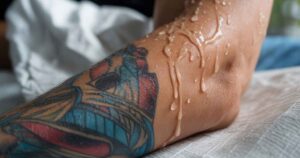
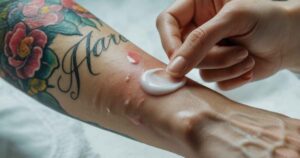
After leaving the studio, expect tattoo oozing to continue. This isn’t pure blood anymore. You’re seeing plasma the clear portion of blood mixed with excess ink and lymph fluid.
First 24 Hours:
- Light ink leakage onto bandage or wrap
- Clear or slightly pinkish fluid leakage
- Some ink color staining your bedsheets possibly
- Wet feeling under protective covering
Days 2-3:
- Decreasing tattoo oozing as skin recovery progresses
- Scab formation beginning across tattooed area
- Minimal to zero fresh blood appearing
Following your aftercare instructions religiously prevents complications. Your tattooist provides specific healing guidelines customized for your tattoo design. Trust their expertise and follow directions precisely.
Recognizing Unusual Bleeding Patterns
Knowing warning signs empowers you to act quickly.
Red Flags Requiring Attention:
- Bright red blood reappearing after initial cessation
- Pulsating or spurting blood from any tattoo area
- Continuous bleeding beyond 72 hours post-procedure
- Increasing rather than decreasing fluid leakage over time
- Foul odor accompanying abnormal bleeding patterns
Trust your instincts. Something feeling wrong probably needs evaluation. Contact your inking expert immediately if unusual symptoms develop. They’ve witnessed countless healing phases and recognize problems instantly.
Healing Process and Bleeding
Tattoo healing follows predictable stages. Bleeding stops as natural clotting mechanisms activate. Your body forms scabs protecting the wound beneath.
Typical Healing Timeline:
| Timeframe | What’s Happening | Bleeding Status |
| Hours 0-6 | Inflammation begins, plasma weeping | Light bleeding/oozing |
| Hours 6-24 | Clotting activates, swelling peaks | Oozing continues, bleeding stops |
| Days 2-4 | Scab formation starts | Zero bleeding expected |
| Days 5-14 | Scabs thicken and protect healing skin | No bleeding whatsoever |
| Weeks 2-4 | Scabs fall off naturally | Complete healing underneath |
Individual healing rates vary tremendously. Age significantly impacts recovery speed. Younger skin regenerates faster naturally. Those over 40 may experience extended healing phases.
Your overall health status affects tattoo healing profoundly. Poor nutrition, dehydration, or chronic stress slow recovery. Prioritize sleep, hydration, and nutrition during the recovery process.
Risk Factors Affecting Tattoo Bleeding
Certain medical conditions increase bleeding likelihood substantially. Awareness prevents complications before they start.
Medical Conditions and Bleeding Risk
High-Risk Medical Conditions:
- Hemophilia or other blood clotting disorders
- Von Willebrand disease affecting platelet function
- Diabetes impacting wound healing and skin recovery
- Autoimmune diseases like lupus or rheumatoid arthritis
- Liver conditions reducing clotting factor production
Always disclose your complete medical history to your tattoo professional beforehand. Reputable artists refuse service if health concerns create unacceptable risks. This protects both you and their professional reputation.
Some pre-existing conditions don’t prohibit tattooing entirely. They simply require extra precautions and modified care instructions. Your skilled tattooist may suggest shorter sessions or specific post-tattoo advice tailored to your situation.
Medications Like Blood Thinners
Blood-thinning medications dramatically increase bleeding during your inking session:
Common Blood Thinners:
- Warfarin (Coumadin)
- Heparin
- Aspirin (even low-dose)
- Ibuprofen and naproxen
- Clopidogrel (Plavix)
Never stop prescribed medications without physician approval. Instead, schedule a consultation with your prescribing doctor. Explain you’re planning body art. They’ll advise whether timing adjustments work safely.
Over-the-counter medications matter too. Stop ibuprofen 48 hours before your design appointment. Switch to acetaminophen for pain relief instead. Skip fish oil supplements and vitamin E temporarily.
Certain herbal supplements thin blood unexpectedly. Ginkgo biloba, garlic supplements, and ginger can increase bleeding. Discuss all supplements with your tattooist during consultation.
Lifestyle and Preparation Tips
Proper preparation minimizes bleeding significantly. Follow these healing tips for optimal results:
One Week Before:
- Eliminate alcohol completely
- Stop blood-thinning supplements safely
- Hydrate consistently every single day
- Moisturize your skin gently daily
48 Hours Before:
- Avoid caffeine and energy drinks
- Get solid, restful sleep nightly
- Eat nutritious, balanced meals regularly
- Skip intense workouts temporarily
Day of Appointment:
- Eat substantial meal 2 hours beforehand
- Bring sugary snacks for session energy
- Wear comfortable, accessible clothing
- Arrive calm and well-rested mentally
These simple wellness factors create ideal conditions. Your professional inking artist notices prepared clients immediately. Better conditions mean better tattoo design outcomes ultimately.
When to Seek Help for Tattoo Bleeding
Most bleeding resolves independently with proper tattoo care. However, certain situations demand professional evaluation.
Signs of Infection or Complications
Immediate Medical Attention Needed:
- Excessive bleeding continuing beyond 72 hours persistently
- Yellow or green pus discharge with odor
- Red streaks extending from tattoo toward body core
- Fever above 100.4°F developing suddenly
- Severe swelling that worsens daily instead of improving
Contact Your Tattoo Artist:
- Uncertainty about bleeding normalcy
- Questions about aftercare instructions interpretation
- Need for reassurance during care during healing
- Minor concerns not requiring medical intervention
Your inking expert represents your first resource. They’ve guided thousands through the healing process. Most questions receive quick answers via text or email.
For serious health issues, seek medical care immediately. Don’t wait hoping problems resolve independently. Early intervention prevents severe complications like systemic infection.
Frequently Asked Questions
Is it normal for my tattoos to bleed?
Yes, light bleeding during and immediately after tattooing is normal.
Do fine line tattoos bleed out?
Fine line tattoos can blur slightly but rarely bleed significantly.
How to tell if body is rejecting tattoo ink?
Redness, swelling, itching, raised bumps, and persistent inflammation signal rejection.
Can you fix a tattoo that has bled?
Yes, skilled artists can touch up or rework tattoos once healed.
Conclusion
Tattoo bleeding is normal, expected, and manageable. Your tattoo needle creates controlled wounds requiring natural healing time. Some blood during and immediately after your inking session shouldn’t cause alarm.
Most bleeding stops within hours. Tattoo oozing continues briefly as your skin healing progresses. Following your recovery instructions precisely ensures beautiful, lasting artistic design results.
Preparation matters enormously. Avoid alcohol, stay hydrated, and disclose medical conditions honestly. Your tattoo professional partners with you for success.
Trust your instincts always. Abnormal bleeding or infection signs require immediate attention. Resources exist when you need guidance use them confidently.
Your new skin illustration represents permanent body art. Proper care tips and attention during the healing phase protect your investment. Now you’re armed with knowledge for a smooth tattoo healing journey ahead.