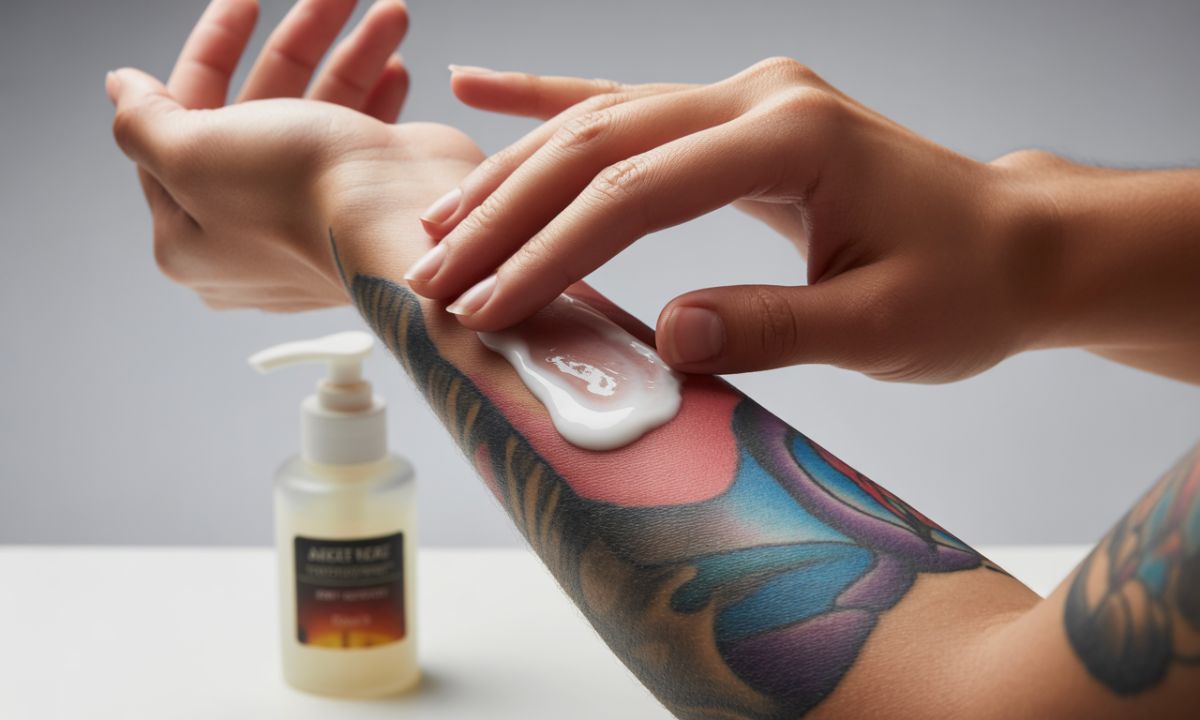
You just walked out of the tattoo parlor with fresh ink. Your artist wrapped it carefully and rattled off instructions. But now you’re home, staring at your new tattoo, wondering: can I put lotion on this thing without ruining it?
The answer isn’t as simple as yes or no. Timing, product selection, and application technique all matter tremendously. Let’s dive into everything you need to know about tattoo aftercare and keeping your ink vibrant for decades.
Understanding Tattoo Aftercare
Tattoo care isn’t just about slapping on moisturizer. Your tattoo is essentially a wound your artist used needles to deposit ink beneath your skin’s surface. This healing process requires careful attention and proper aftercare guidelines to prevent complications.
The Importance of Proper Healing
Proper healing determines whether your tattoo stays sharp or becomes a blurry mess. Studies show poorly healed tattoos fade up to 40% faster than those receiving appropriate care. The recovery period typically spans 2-4 weeks for surface healing, though complete tattoo recovery takes 3-6 months.
During this healing phase, your body works overtime repairing damaged tissue while encapsulating ink particles. Interrupt this process, and you’ll face fading, scarring, or infection. Professional advice consistently emphasizes that ink aftercare during these critical weeks makes or breaks your tattoo’s longevity.
Common Aftercare Myths
Half the information circulating about tattoo healing is flat-out wrong. Let’s bust some myths:
- Myth: Keep your tattoo completely dry
- Truth: Controlled moisture is absolutely essential
- Myth: Any lotion works fine
- Truth: Wrong products cause serious healing issues
- Myth: Let it breathe without covering
- Truth: Initial protection prevents contamination
Following outdated advice leads to tattoo healing complications that require expensive touch-ups or medical intervention.
When to Start Applying Lotion
Lotion timing can make or break your outcome. Rush the process, and you’ll regret it. Wait too long, and excessive dryness causes problems.
Timing Your First Application
Most tattoo expert advice recommends waiting 24-48 hours before applying lotion. Here’s the timeline:
| Time Period | Action Required | Why It Matters |
| 0-4 hours | Keep initial bandage on | Protects from airborne bacteria |
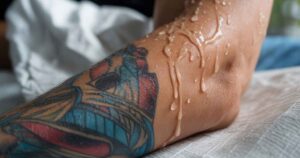
| 4-24 hours | Remove bandage, wash gently | Clears plasma and excess ink |
| 24-48 hours | First lotion application | Skin ready for hydration and moisture |
| Days 3-14 | Regular moisturizing routine | Prevents excessive flaking |
Your artist’s specific care instructions trump general guidelines. Some recommend lightweight lotion sooner for larger pieces.
Recognizing Signs Your Tattoo Is Ready
Your skin literally tells you when it needs moisture. Look for these indicators:
- Skin feels tight but not weeping
- No longer shiny or wet-looking
- Slight dryness without excessive flaking
- Reduced redness and swelling
- Temperature returns to normal
Warning signs it’s NOT ready:
- Still oozing plasma or ink
- Excessive bleeding or fluid
- Extreme tenderness or inflammation
The Impact of Premature Lotion Use
Applying lotion too early creates more problems than it solves. Premature lotion use traps bacteria beneath the moisturized skin, preventing your body’s natural plasma barrier from forming. This increases infection risk dramatically and can cause ink displacement leading to blurry edges and faded colors.
One case study from a dermatology journal documented a patient who applied fragrance-free lotion just two hours after tattooing. The result? A bacterial infection requiring antibiotics and permanent color distortion.
What Type of Lotion Is Best for a New Tattoo?
Not all lotions deserve contact with your fresh ink. Product selection determines whether you heal beautifully or face recovery complications.
Fragrance-Free and Sensitive Skin Options
Fragrance-free products are non-negotiable. Chemical fragrances irritate healing wounds and slow the healing duration. Your sensitive skin lotion should contain zero artificial scents, dyes, or harsh preservatives.
Top recommended options:
- Aquaphor Healing Ointment (initial days)
- Lubriderm Daily Moisture (ongoing care)
- Aveeno Daily Moisturizing Lotion
- CeraVe Moisturizing Cream
These gentle creams provide skin hydration without overwhelming healing tissue.
Benefits of Mild and Antibacterial Lotions
Light cream formulations absorb quickly without suffocating pores. A non-greasy lotion allows your tattoo recovery to progress naturally while maintaining moisture balance.
Ingredients to seek:
- Ceramides for barrier repair
- Hyaluronic acid for hydration
- Panthenol for soothing
Ingredients to avoid:
- Alcohol (extremely drying)
- Petroleum (clogs healing pores)
- Lanolin (common allergen)
- Artificial fragrances
- Retinol or acids
How to Properly Apply Lotion to a New Tattoo
Application technique matters as much as product choice. Master this process for optimal recovery.
Step-by-Step Application Process
Follow these exact steps for healthy healing:
- Wash hands thoroughly with antibacterial soap
- Clean your tattoo with lukewarm water and unscented lotion-friendly soap
- Pat dry completely with clean paper towels
- Wait 5-10 minutes for full drying
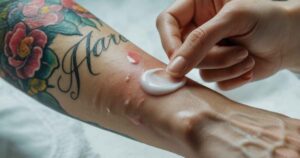
- Dispense pea-sized amount of lightweight lotion
- Warm between fingertips
- Apply using gentle circular motions
- Let absorb completely (2-3 minutes)
- Blot any excess your clean and moisturized tattoo shouldn’t look greasy
Frequency: 2-3 times daily for effective recovery
How Much Lotion to Use
Keeping moisturized doesn’t mean drowning your tattoo. Use these guidelines:
- Small tattoo (2-3 inches): pea-sized amount
- Medium tattoo (4-6 inches): dime-sized portion
- Large tattoo (7+ inches): nickel-sized quantity
Your hydrated tattoo should look moisturized, not shiny. Visible lotion care sitting on the surface indicates you’ve used too much.
Common Mistakes and Potential Complications
Even well-intentioned tattoo care can go wrong. Recognize these healing challenges early.
Over-Moisturizing and Its Effects
You can absolutely smother your tattoo to death. Excessive skin hydration prevents proper scabbing and creates breeding grounds for bacteria. Healing setbacks from over-moisturizing include:
- Ink “floating” out of skin
- Waterlogged appearance (maceration)
- Prolonged healing time
- Color distortion and blurring
Fix it: Reduce frequency immediately, use smaller amounts, allow longer intervals between applications.
Reactions: Rashes and Allergies
Even gentle lotion can trigger reactions. Watch for:
- Contact dermatitis around tattooed area
- Hives or raised welts
- Excessive itching beyond normal healing
- Burning or stinging sensations
Discontinue use immediately if you notice these tattoo problems. Rinse with cool water and consult your artist or dermatologist.
Risks of Using the Wrong Products
Some products literally destroy your investment. Lotion mistakes with these items cause permanent damage:
- Scented lotions causing chemical burns
- Oil-based products suffocating skin
- Expired or contaminated lotions
- Medicated creams interfering with proper tattoo care
One documented case involved a client using coconut oil despite expert guidance against it. Result? Complete ink loss requiring a costly redo.
Additional Tattoo Healing Tips
Successful healing requires more than just moisturize tattoo protocols.
Why You Should Avoid Plastic Wrap
Plastic wrap was popular once science proved it wrong. It creates anaerobic environments perfect for bacteria, traps excessive moisture, and prevents skin healing properly.
Use instead:
- Breathable adhesive bandages (Saniderm, Tegaderm)
- Clean gauze with medical tape
- Modern second-skin products
Keeping Your Tattoo Clean and Safe
Hygiene and moisture work together. Sanitized skin prevents tattoo healing complications that lotion guidance alone can’t fix.
Daily protocols:
- Wash 2-3 times with unscented antibacterial soap
- Use lukewarm water only (never hot)
- Pat dry gently never rub
- Allow air-drying between cleanings
Avoid these hazards:
- Swimming pools (chlorine disaster)
- Hot tubs and bacteria risks
- Direct sunlight exposure
- Gym equipment and sweat
- Tight clothing causing friction
Timeline for activities:
- Swimming: safe after 2-4 weeks
- Sun exposure: after complete healing only
- Intense exercise: resume after 2 weeks
Frequently Asked Questions
When is it safe to start applying lotion to a newly inked tattoo?
Wait 24-48 hours after removing your initial bandage before applying.
After how many days should I switch from ointment to lotion on my new tattoo?
Switch from ointment to lotion after approximately three to five days.
Are there specific types of lotions that are recommended for use on a new tattoo?
Use fragrance-free, hypoallergenic, lightweight lotions designed for sensitive healing skin types.
What are the potential risks of using lotion on a new tattoo too early?
Early application traps bacteria, prevents scabbing, causes infections, and blurs ink.
Is it possible to moisturize a new tattoo too frequently with lotion?
Yes, over-moisturizing causes maceration, ink loss, bacterial growth, and prolonged healing.
What ingredients in lotions should be avoided when caring for a new tattoo?
Avoid fragrances, alcohol, petroleum, lanolin, retinol, acids, dyes, and harsh preservatives.
Conclusion
Can you put lotion on a new tattoo? Absolutely but timing and technique determine success. Wait 24-48 hours after your initial bandage comes off, choose fragrance-free lotion designed for sensitive skin, and apply thin layers 2-3 times daily.